Sunday, 11 January 2015

Desert Night Lizard

                    DESERT NIGHT LIZARD

SCIENTIFIC NAME :-       Xantusia vigilis
OCCURRENCE :-              S.W.USA , Mexico
HABITAT :-                     Rocky,Arid and semi-arid land 
SIZE :-                            Length 9.5 to 12.5cm
FAMILY :-                       Xantusiidae


GENERAL CHARACTERISTICS :- 

  1. It is a nocturnal robust lizard with scales on the back and belly and shields on the head.
  2. Its coloration varies over its range but it is marked with many small dark spots.
  3. It has immobile eyelids with lower one having transparent windows.
  4. It feeds on termites , ants , beetles and flies.
  5. Mating takes place in May or June.
  6. The female gives birth to 1-3 live young which develop inside her body , nourished by a form of placenta.


Gila Monster

                          GILA MONSTER 

SCIENTIFIC NAME :-     Helederma suspectrum
OCCURRENCE :-            Mexico,Arizona,S.Utah
HABITAT :-                   Arid and semi arid regions
SIZE :-                          Length 45 to 61 cm
FAMILY :-                     Helodermatidae


GENERAL CHARACTERISTICS :-

  1. It is a heavy-bodied , nocturnal , gaudily patterned lizard with colored bead-like scales on its back.
  2. The stout tail is a reservoir of stored fat which is used up whenthere is scarcity of food.
  3. It has a well developed limbs and forked tongue which can be flicked in and out of the mouth.
  4. It is venomous lizard with poison glands in the lower jaw from where the poison enters the mouth via grooved teeth at the front of the lower jaw.
  5. It feeds on small reptiles and eggs of birds.
  6. Mating takes place in summer.
  7. The female lays a clutch of 3-5 eggs.


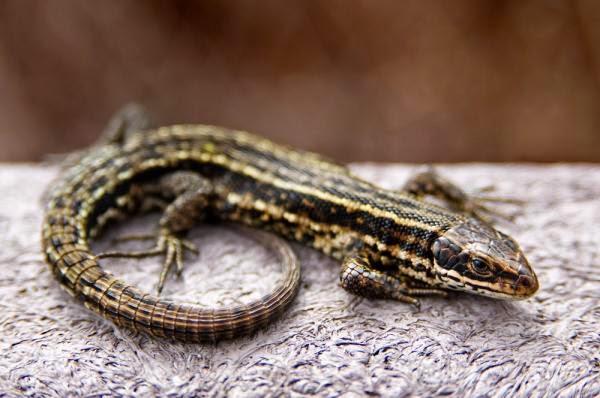
                       VIVIPAROUS LIZARD

SCIENTIFIC NAME :-    Lacerta vivipara
OCCURRENCE :-           Arctic Scandinavia,Britain,S. to N.Spain,N.Asia
HABITAT :-                  Meadows, Marshes,Open woodland
SIZE :-                         Length 14 to 18 cm
FAMILY :-                    Lacertidae


GENERAL CHARACTERISTICS :-

  1. It is an alert and agile , elongate , long tailed lizard with large scales on the head and belly.
  2. Its coloration varies over its wide range but it is commonly grey or yellowish-brown with pale yellow spots and dark stripes on the back.
  3. It is a good climber and swimmer and solitary creature except during hibernation and mating season.
  4. It feeds on insects , spiders , earthworms , slugs and other small invertebrates.
  5. The 5-8 young develop inside the female feeding on the yolks of their shells fully formed , as they are expelled from the body or soon afterwards.

                             GREEN LIZARD 

SCIENTIFIC NAME :-       Lacerta viridis
OCCURRENCE :-              Channel Islands,S. to N.Spain, Sicily, Greece
HABITAT :-                     Open woodland,River banks
SIZE :-                            Length 30 to 45 cm
FAMILY :-                       Lacertidae


GENERAL CHARACTERISTICS :-

  1. It is an elongate , medium-sized lizard with large scales on head and belly and a long tail.
  2. Males are bright green , finely engraved with black . Females are often chiller green or brownish.
  3. The colour becomes bright in spring when it is the breeding season and fades later in the year.
  4. An agile climber it feeds on insects , larvae , spiders and other small invertebrates.
  5. The male compete fiercely for the females in the mating season.
  6. The male grasps the female with its jaws while mating.
  7. The female 4-21 eggs which she buries in a hole dug in the soil.
  8. The eggs remain there for several moths while they develop and hatch.

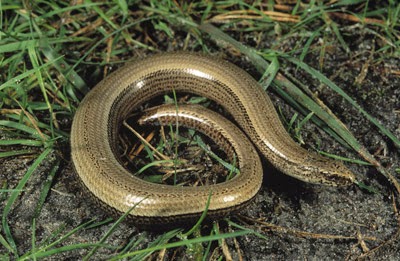
Glass Snake

GLASS SNAKE 

SCIENTIFIC NAME :-    Ophisaurus apodus
OCCURRENCE :-           Europe east to S.W. and C.Asia 
HABITAT :-                  Forest 
SIZE :-                         Length upto 12 cm
FAMILY :-                    Anguidae 


GENERAL CHARACTERISTICS :-

  1. It is a snake-like , stiff and heavy bodied lizard with an armour of bony plates under the smooth scales and vestings of hind limbs.
  2. The undercoat of armour is not continuous , but there are grooves of flexible scales on each side to allow the body to expand when necessary.
  3. Its long tail can be easily detected if seized by an attacker and can be regenerated within few days.
  4. It has movable eyelids and external ear openings.
  5. It is active during the day and feeds on lizards , mice and other small animals.
  6. Males fight fiercely for the female.
  7. The female lays 5-7 eggs under a rock or log and curls around her eggs while they incubate . The eggs hatch after 4 weeks.


Dibamus

                              DIBAMUS

SCIENTIFIC NAME :-  Dibamus novaeguineae
OCCURRENCE :-        New Guinea 
HABITAT :-               Forest
SIZE :-                      Length upto 30 cm
FAMILY :-                 Dibamdae


GENERAL CHARACTERISTICS :-

  1. It is a small , worm-like , blind , limbless lizard specialized for a subterranean life.
  2. The eyes and ears are covered with skin , the nostrils are placed on a elongated scale at the tip of the snout and the teeth are small and backward curving.
  3. The male has stump like vestiges of hind limbs that are used for clasping the female during mating.
  4. They spend their life burrowed in rotting logs and soil and lay their eggs there only.


Hooded Scaly-Foot

                     HOODED SCALY-FOOT

SCIENTIFIC NAME :-    Pygopus nigriceps
OCCURRENCE :-          Western Australia
HABITAT :-                 Dry inland country , Coastal forest
SIZE :-                       Length 46 cm
FAMILY :-                   Pygopodidae


GENERAL CHARACTERISTICS :-

  1. Limbless and snake-like , this lizard has scaly flap-like hind limbs each containing tiny leg bones and fore toes which are normally held close to the body but are raised when disturbed and alarmed.
  2. It has a rounded snout , fused eyelids and an extremely long tail.
  3. It can draw its head back and hiss like a snake.
  4. It emerges at night or dusk to feed on insects and small lizards.
  5. The female lays 2 eggs.